01 / EXPLORE
Mount Huangshan
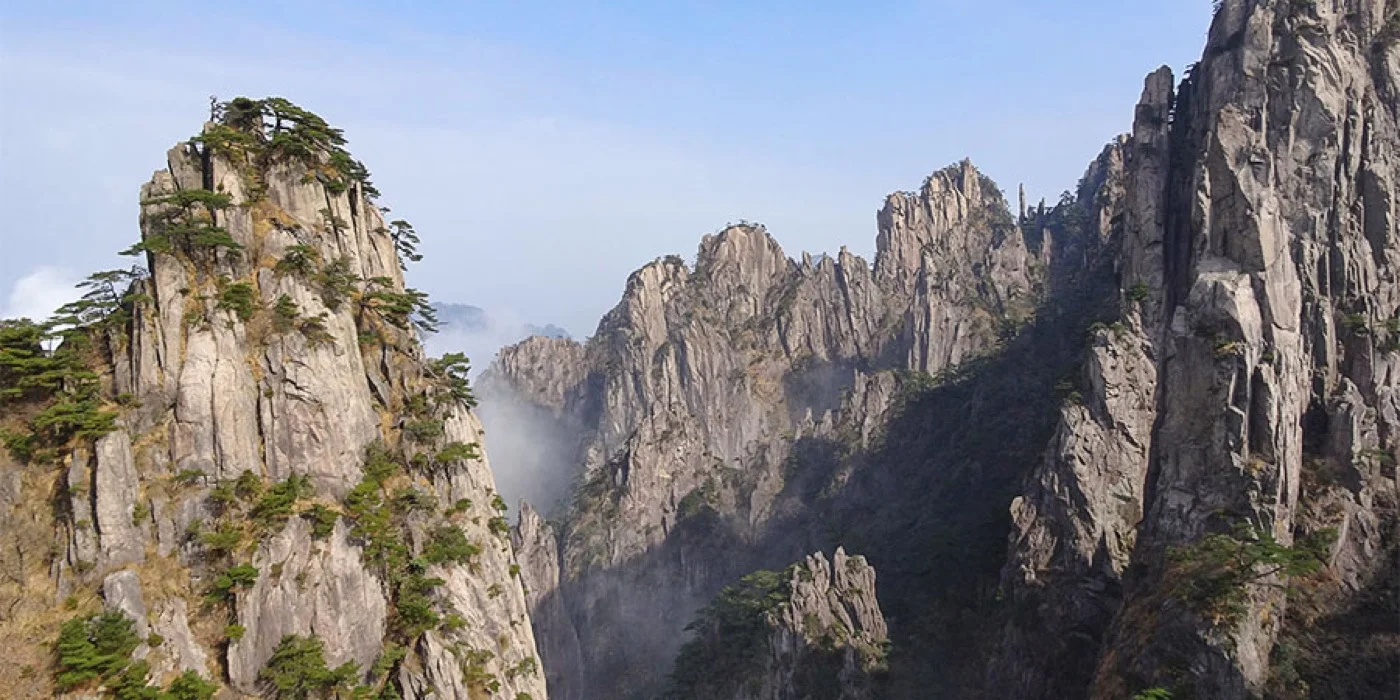
Plan a mountain route around walking ability and weather. Stone steps, pine-framed viewpoints and changing cloud cover make the journey part of the experience.
 WANDERCHINA
Huangshan is both a city base and a gateway to mountain scenery and Huizhou villages. Separate the mountain, Tunxi and village outings in your plans so each has time to unfold.
Granite peaks and wind-shaped pines give the mountain its distinctive silhouette. Down in the villages, white walls and dark roofs frame a different relationship between landscape, water and architecture.
The granite and pine landscape of Mount Huangshan and the white walls of Hongcun offer very different experiences. One is shaped by ascent, distance and weather; the other invites close attention to water, lanes and domestic architecture. Their contrast is best appreciated when neither is reduced to a brief stop between transfers.
Think about where the day begins and ends: the city, a village area and the mountain are not interchangeable bases. Once the overnight sequence makes sense, add the walks and meals around it. A shorter route with time to notice detail can be more memorable than trying to connect every famous view.
Plan a mountain route around walking ability and weather. Stone steps, pine-framed viewpoints and changing cloud cover make the journey part of the experience.
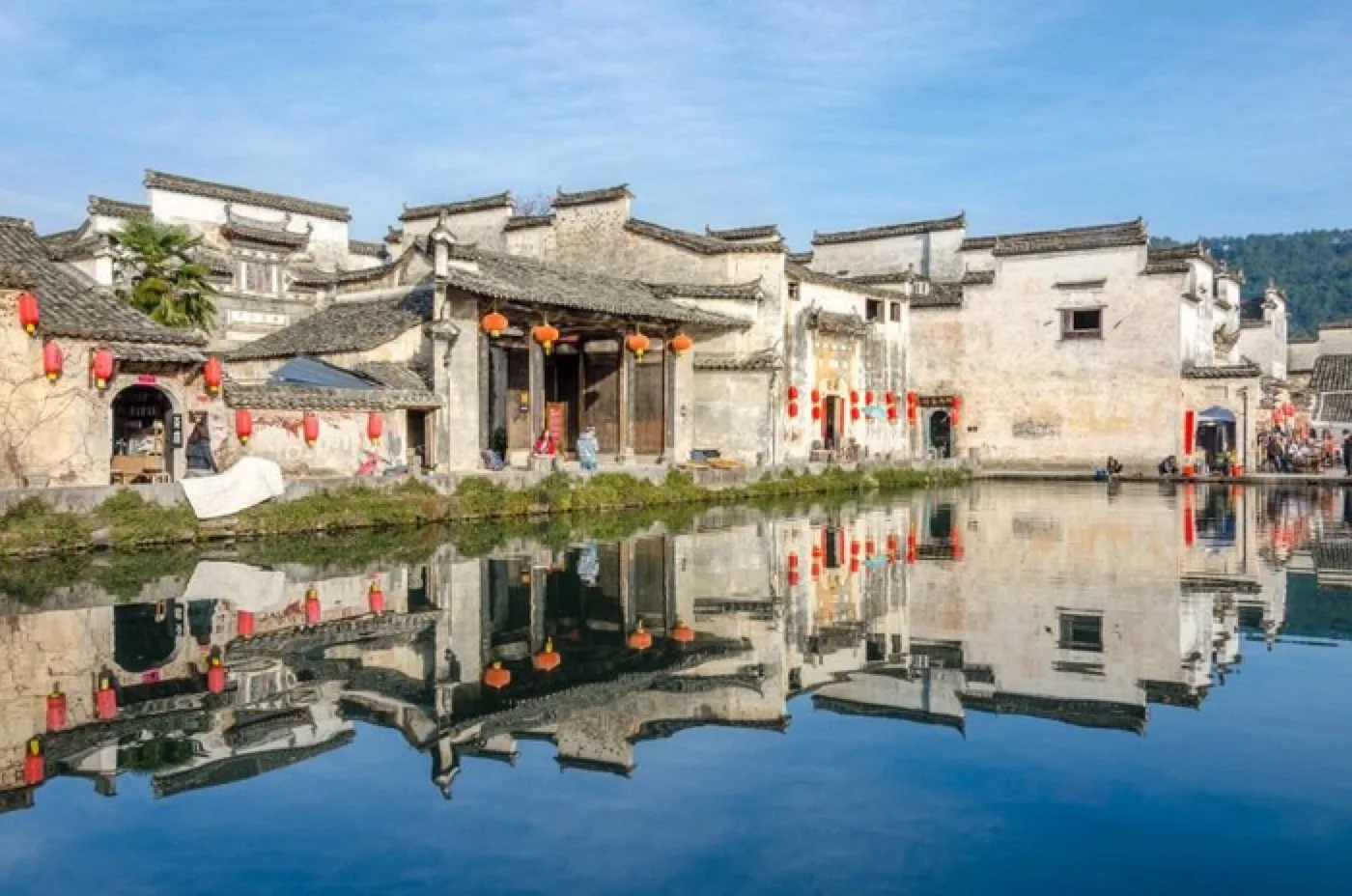
Explore the village’s lanes and waterside architecture as a separate excursion. Give the quieter side streets as much attention as the familiar pond views.
These foods are part of the wider region’s traditions; availability and recipes vary by restaurant.
A fermented fish preparation with a distinctive aroma and savory sauce. Ask about portions and seasoning before sharing a dish.
Fermented tofu is cooked until the surface develops color and served with seasonings. Its texture and aroma are central to the experience.
Locate the city and explore the surrounding area. Open Google Maps for a closer look.